Witness The Journey: From Biological Mutiny to Sky Mastery
The Medical Journey: From Hospital Bed to Sky
Syam's incredible medical journey through 21 surgeries, kidney transplant, and the determination that led him to the sky
World Record Breakthrough: 13,000ft Solo Jump
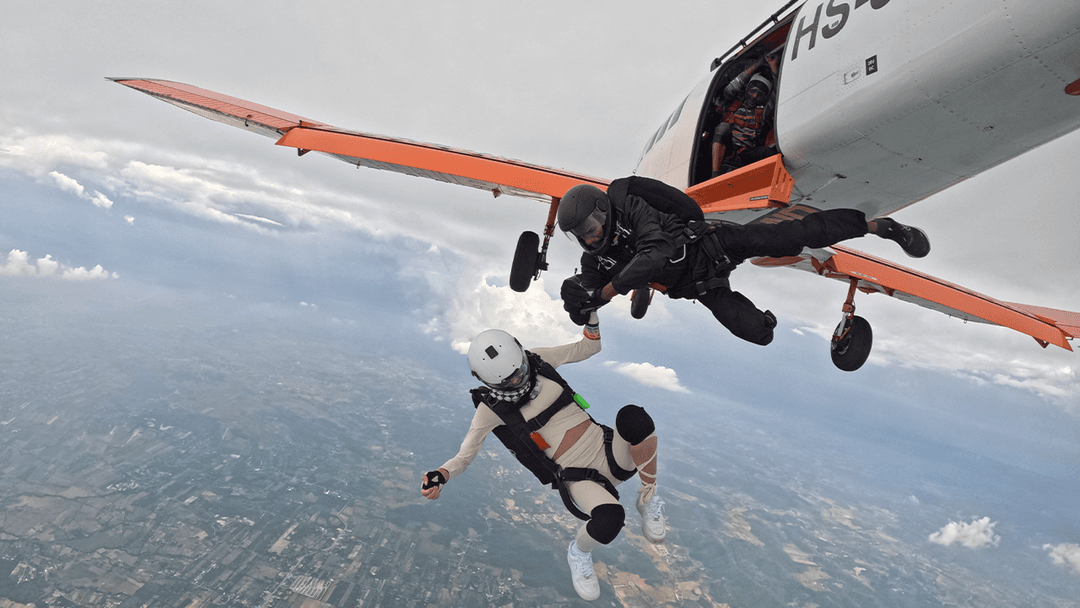
The historic moment - youngest amputee solo skydive from 13,000ft without prosthetic leg, certified by International Book of Records
Sky Beyond Limits: 43,000ft Mission Revealed
The future mission targeting three world records from 43,000ft with adaptive wingsuit technology and global partnerships
These testimonials showcase Syam's incredible journey from medical trauma to sky mastery. Each video tells a part of the story that proves human potential has no ceiling.
What I've been
Working On
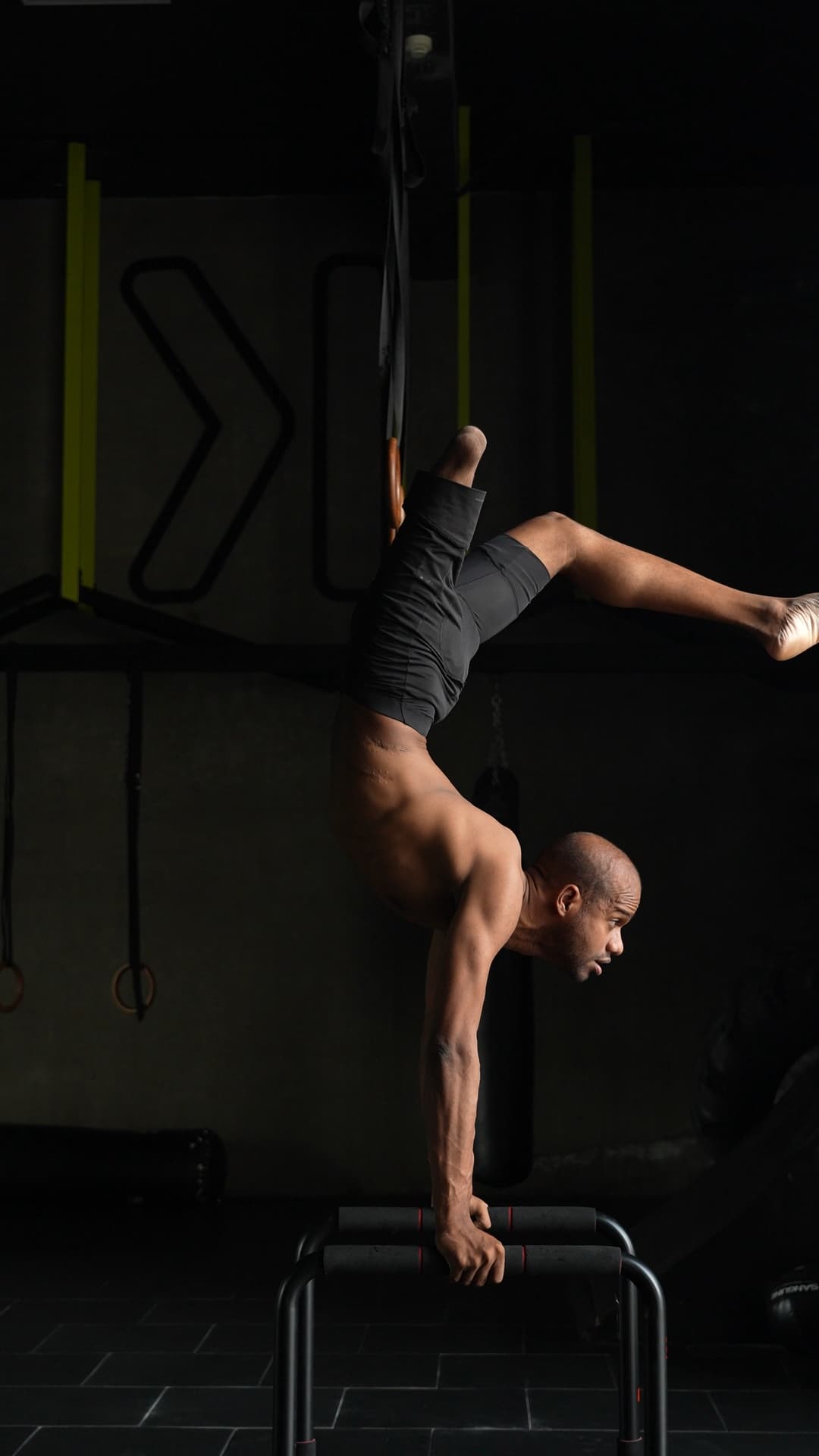
Skillhac
A social media for film lovers and filmmakers.
About me
Day 0: Biological Mutiny - The Body That Fought Its Design
Age 8: The Choice - Operation Room #7
Age 22: Gravity Defied - 13,000ft World Record
Age 25: Sky Beyond Limits - 43,000ft Mission
Kulathummal Village, Kerala. 2001. Normal delivery for 47 seconds. Then silence fell across the delivery room. Right leg twisted, fused toward buttocks. Blue spinal mark stained his spine like spilled ink. Spina bifida lipomeningocele. Three kidneys. Neurogenic bladder. Survival odds: 23%. This wasn't birth - this was biological mutiny. The war between Syam and his own body had begun.
About Me
The Hospital Years: 1,247 Days by Age Five
Kidney Apocalypse: 1,095 Dialysis Sessions
Earthbound Rebellion: Movement as Medicine
Daily Reality: Age 25 - January 22, 2026
Syam's first five years belonged to antiseptic corridors, not playgrounds. Five major surgeries before kindergarten: spinal defect excision, bladder augmentation, testicular removal, structural stabilization (failed twice), kidney drainage. Catheterization every 2-3 hours to prevent sepsis. His parents learned medical terminology faster than nursery rhymes. Mother became nurse, advocate, warrior when hospitals failed.
Mission Impossible 01
Wingsuit Flying at 42000ft
An adaptive high-risk athlete and aerospace mission aspirant pursuing one of the most technically and humanly challenging feats in modern wingsuit history: enabling controlled high-altitude wingsuit flight with a single leg in a fundamentally asymmetrical body. Conventional wingsuit flight depends on perfect bilateral leg symmetry, precise weight distribution, and aerodynamic balance my body does not naturally possess due to limb loss and severe structural scoliosis making this mission widely considered impossible by existing standards; rather than accept that limit, I am engineering solutions where anatomy ends, beginning with the development of a hand-controlled mechanical leg system designed to dynamically balance mass, stabilize yaw and roll, and restore controlled glide authority during wingsuit flight. The ultimate objective is a 42,000-foot high altitude wingsuit jump, a regime comparable to stratospheric aerospace operations, where the absence of oxygen, extreme hypoxia, and ambient temperatures between –70°C and –90°C impose life critical constraints, necessitating redundant supplemental oxygen systems, advanced physiological monitoring, and a custom electrically powered thermal suit capable of sustaining core body temperature in near-space conditions. This mission requires a minimum of three years of structured preparation, including hypoxia and altitude conditioning, intensive physical and neuromuscular training, and aerodynamic validation through advanced wind-tunnel testing in Sweden, combined with progressive wingsuit jump testing to validate safety margins and system reliability. Compounding the challenge is my severe lower structural scoliosis, which makes hard landings a credible paralysis risk; in response, I am developing and flight-testing a proprietary protective landing and impact-mitigation system integrated into the suit architecture, treating survivability as an engineering problem rather than a gamble. This project exists at the intersection of human resilience, adaptive aerospace engineering, and extreme-environment physiology, and its success would redefine inclusion not as accommodation, but as innovation demonstrating that bodies traditionally excluded from aerospace and high-performance flight can become platforms for technological advancement rather than limitations. I seek collaboration with aerospace institutions, research organizations, and engineering partners including ISRO, NASA, and private innovators to co-develop life-support systems, thermal regulation technologies, adaptive control mechanisms, and safety architectures that extend beyond this mission into broader applications for aviation, spaceflight, and human performance in extreme environments. This is not an attempt to defy risk, but to systematically understand, engineer, and manage it transforming a body shaped by adversity into a testbed for progress, and proving that the future of flight is not defined by physical symmetry, but by human ingenuity, discipline, and the courage to redesign what is considered possible.
Mission Impossible 02
Tom cruise cliff jump for Documentry
The development and real-world deployment of a next-generation adaptive right-leg system engineered specifically for high-impact motocross landings, enabling controlled aerial jumps and safe ground absorption for an athlete with a single biological leg and severe structural spinal vulnerability. Drawing technical inspiration from advanced adaptBioDaptility systems such as the BioDapt Moto Knee 2 while extending far beyond existing prosthetic frameworks this project focuses on designing a custom impact-mitigating, energy-dissipating, and spine-protective mechanical leg capable of absorbing extreme vertical and lateral forces generated during motocross jumps and uneven landings. Unlike conventional prosthetics optimized for walking or light sport, this system is being engineered as an active safety architecture, integrating progressive shock absorption, multi-axis articulation, controlled rebound damping, and spinal load-distribution pathways to reduce peak force transfer to the pelvis and vertebral column, where injury or paralysis risk is critical. The leg design phase is complete, and the mission now advances toward fabrication, testing, and validation through staged jump simulations, culminating in a live-action cinematic motocross jump sequence planned in Norway conceptually inspired by the iconic high-risk practical stunts popularized in the Mission: Impossible franchise and performers such as Tom Cruise, but executed with real physics, real risk management, and real adaptive engineering. This jump is not a spectacle for shock value; it is a documented proof-of-concept demonstrating how intelligent mechanical design can convert vulnerability into controlled performance, captured as a pivotal scene for a Netflix documentary intended to reach a global audience and reframe disability as a frontier for innovation rather than limitation. The project’s broader objective extends beyond personal achievement: to establish a scalable blueprint for adaptive impact-sport prosthetics that can reduce spinal injuries, expand access to motocross and action sports for amputees, and influence safety design in extreme sports equipment worldwide. Strategic partnerships are sought with biomechanical engineers, materials scientists, motorsport safety specialists, and medical advisors to refine structural integrity, validate load thresholds, and ensure ethical risk management, while media collaboration ensures the mission’s story educates as much as it inspires. Mission No. 2 stands at the convergence of engineering, human resilience, and storytelling where a single, precisely designed leg becomes both a life-saving system and a symbol of what is possible when adaptive technology is pushed beyond accommodation into performance, protection, and purpose.
Articles
THE WEEK
Youngest person to skydive solo with a prosthetic leg
Read article →
THE WEEK Health Summit 2025
From suicidal thoughts to solo skydiving — the comeback India needs
Read article →
New Indian Express
Sky’s the limit
Read article →
THE WEEK
Some doctors changed my life
Read article →
Happiest Health
Skydiving solo with a prosthetic leg
Read article →
New Indian Express
Nothing will stop me from climbing Mt Everest
Read article →
ETV Bharat
Amputee cyclist battles incredible adversities
Read article →
Mathrubhumi
Amputee helps during Kerala floods
Read article →
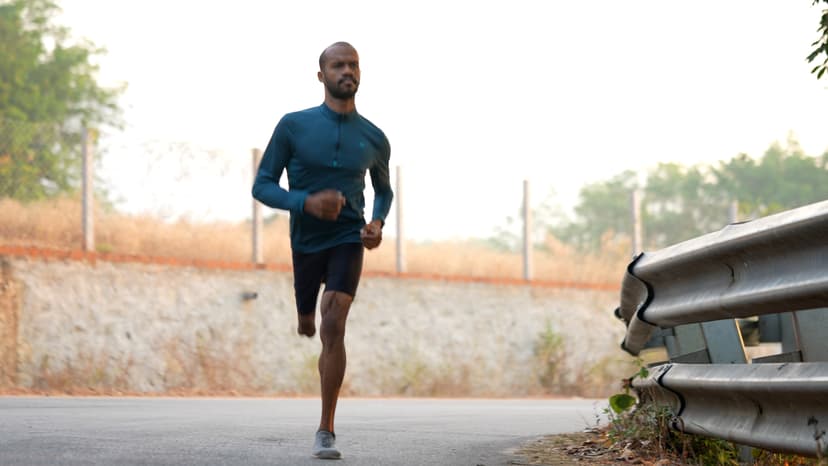
SYAMKUMARSS
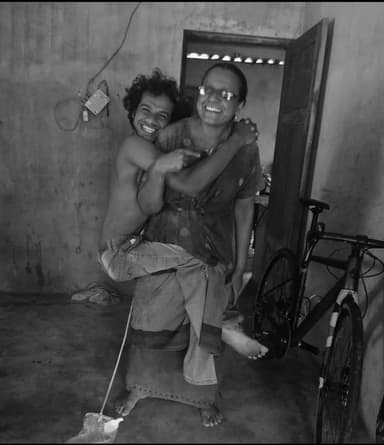
Born with spina bifida, congenital scoliosis, neurogenic bladder, three kidneys, spinal risks, and a severely underdeveloped right leg. Multiple surgeries began within days of birth.
Early childhood marked by repeated surgeries, catheter dependency, chronic infections, and learning pain before language.
Trained in clean intermittent catheterisation. Social isolation and medical monitoring became daily realities.
At age eight, chose right-leg amputation — a strategic decision for mobility, independence, and survival.
Continued surgeries, learned to walk and run on one leg, while facing severe bullying and deep emotional trauma.
Kidney function declined steadily. Awareness of mortality grew, alongside quiet physical endurance and inner resolve.
Kidney function dropped below 25%. Major surgeries followed, living daily with the certainty of eventual renal failure.
Discovered cycling as liberation. Completed long endurance rides despite physical breakdowns, forming an endurance identity.
Renal failure led to dialysis and a high-risk transplant from mother. Survival marked a turning point.
Post-recovery: skydiving, paragliding, scuba diving, filmmaking, and 100+ jumps — evolving into an adaptive systems thinker.
MORE
ABOUT
ME
My Story
From hospital beds
to open skies
I was born into a body that challenged life even before I understood what life was, born with spina bifida, spinal deformities, a neurogenic bladder, scoliosis, three kidneys, and a severely underdeveloped right leg, and from my very first breath, survival became my daily language;
my childhood was not measured in birthdays or school terms but in hospital rooms, operation theaters, medical reports, scars, needles, and the quiet fear in my parents’ eyes as doctors spoke in clinical tones about probabilities and risks,
and while other children learned how to walk freely, I learned how to endure pain, how to stay still during procedures, how to accept catheters and tubes that forced me to urinate through plastic lines, stealing dignity at an age when innocence should have been protected,
yet even then I learned self-reliance because my body demanded it, and school did not offer refuge either, because classrooms were not built for bodies like mine nor minds shaped by pain, and I carried my differences on my skin and in my posture, feeling the weight of stares, whispers, isolation, and the silent cruelty of being treated as fragile or invisible, struggling to focus while my body ached and my mind fought battles no child should fight,
and by the age of eight, after countless surgeries and relentless suffering, my right leg was amputated, a moment that many would call an ending but for me became a turning point, because something inside me hardened into resolve, and instead of shrinking, I chose motion,
choosing to cycle not for medals but for freedom, pedaling through pain and doubt as every rotation of the wheel reminded me that movement was rebellion and balance was power,
and surgeries continued, pain never left, kidney failure entered my life, dialysis chained me to machines, and later a renal transplant rewrote my relationship with mortality, forcing me to live immunosuppressed, always cautious, always aware that life could change overnight,
and emotionally there were nights of fear, frustration, anger, loneliness, and questioning my own existence, moments where my mind felt heavier than my body,
yet somewhere between scars and survival I made a choice not to let suffering define the size of my dreams, and that choice led me to the sky,
where against logic, statistics, and expectations I became a skydiver, paragliding pilot, and scuba diver without a prosthetic leg, learning to adapt my body to freefall, to understand aerodynamics with one leg, to trust myself while gravity made no exceptions,
jumping from 13,000 feet not because I was fearless but because fear no longer controlled me, finding in the sky a freedom I had never known on land, becoming one of the world’s youngest amputee skydivers, not chasing records but reclaiming ownership over my body and my story,
and along the way I became a survivor of kidney failure, a licensed skydiver with over a hundred jumps, a motivational speaker, an adaptive athlete, a filmmaker, and a storyteller,
but achievements were never the purpose, because my real mission is larger than personal success,
it is to create access where there was exclusion, dignity where there was dependence, and paths where there were walls, to build legs not just as prosthetics but as possibilities,
to give children and adults like me freedom without permission, to stand beside those who still urinate through tubes, who hide scars under clothes, who live with chronic pain, emotional trauma, and mental exhaustion,
and tell them that their body is not their limitation, that pain does not cancel purpose, and that survival itself is a powerful qualification,
because my life is not a story of inspiration meant to make others feel momentarily hopeful, it is a statement of resistance against a world that underestimates differently-abled bodies,
and everything I do now is guided by that belief, whether I am flying, speaking, creating, or dreaming of even higher skies,
because I exist to show that freedom is not given, it is taken,
and this journey, from hospital beds to open skies, from tubes to turbulence, from pain to purpose, is only the beginning of what I am here to build and give back to the world,
and my story, my work, and my mission live on
Freedom is not given. It is taken.
And this journey is only the beginning.